The Chicken House Raider

 
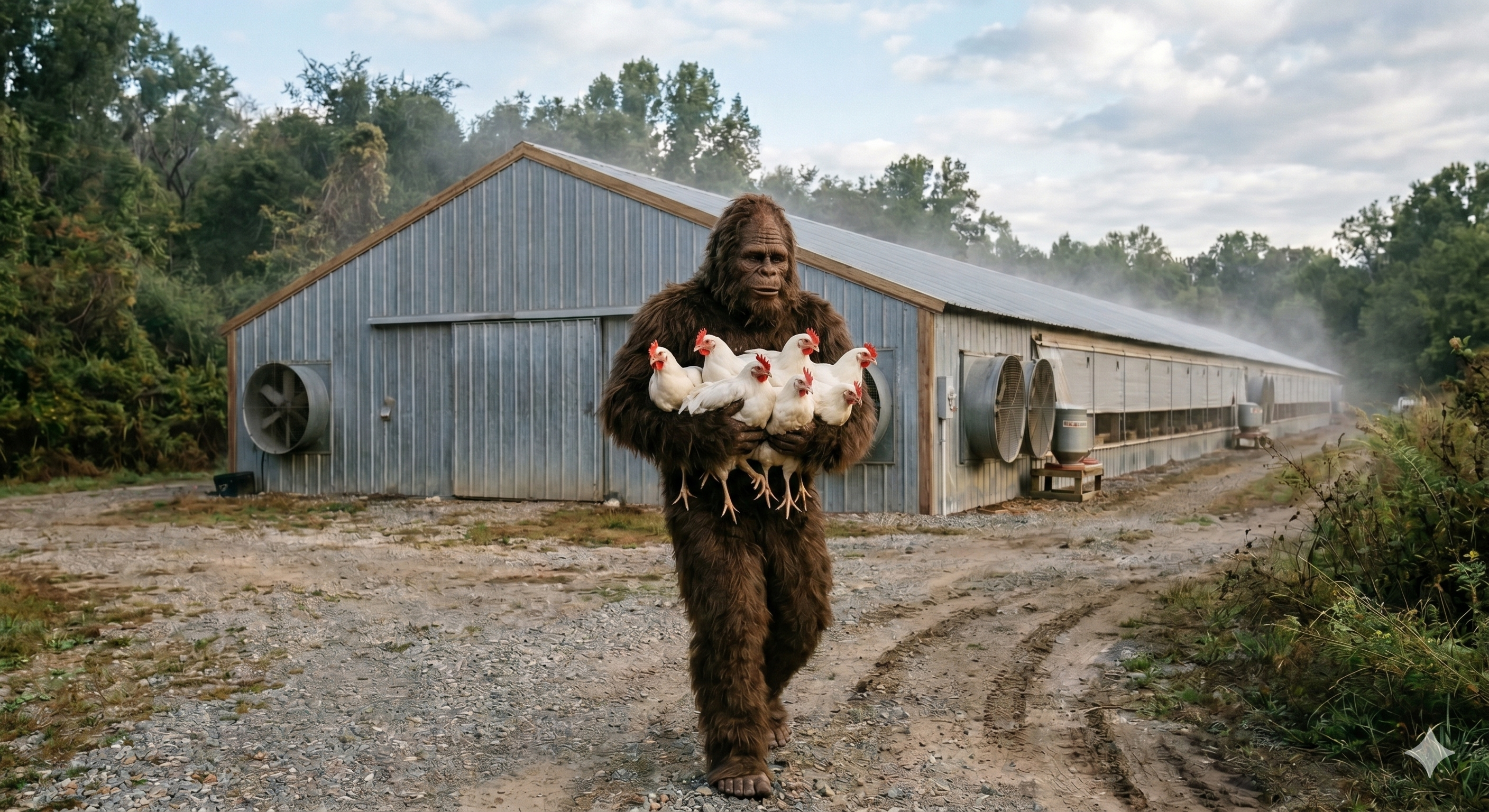
One of my all-time favorite Bigfoot encounters that I investigated took place back in the early 2000s, when a contract grower for Tyson near Oklahoma’s Illinois River ran into an eight-foot chicken thief.
 
The farmer had been walking the perimeter of one of the long chicken houses. As he swung around the far corner, he ran smack into a Bigfoot coming the other way with an armload of live chickens. The collision knocked the farmer flat on his back, and the Bigfoot was so startled that it dropped the whole bundle of squawking birds. For a second, the creature just stood there, looking down at the dazed farmer. Then it reached down, scooped up some of the birds, and disappeared into the woods.
 
When we inspected the coop, it became clear the creature had been watching the crew: it had figured out the latch mechanism and even had the presence of mind to pull the door shut behind itself so the rest of the birds wouldn't scatter.
 
Needless to say, that was enough for the farmer—he put the land up for sale and relocated soon after. Today, those chicken houses are nothing more than dilapidated ruins, but I think of that encounter every single time I pass one.
 
(AI Graphic just for illustrative purposes only)
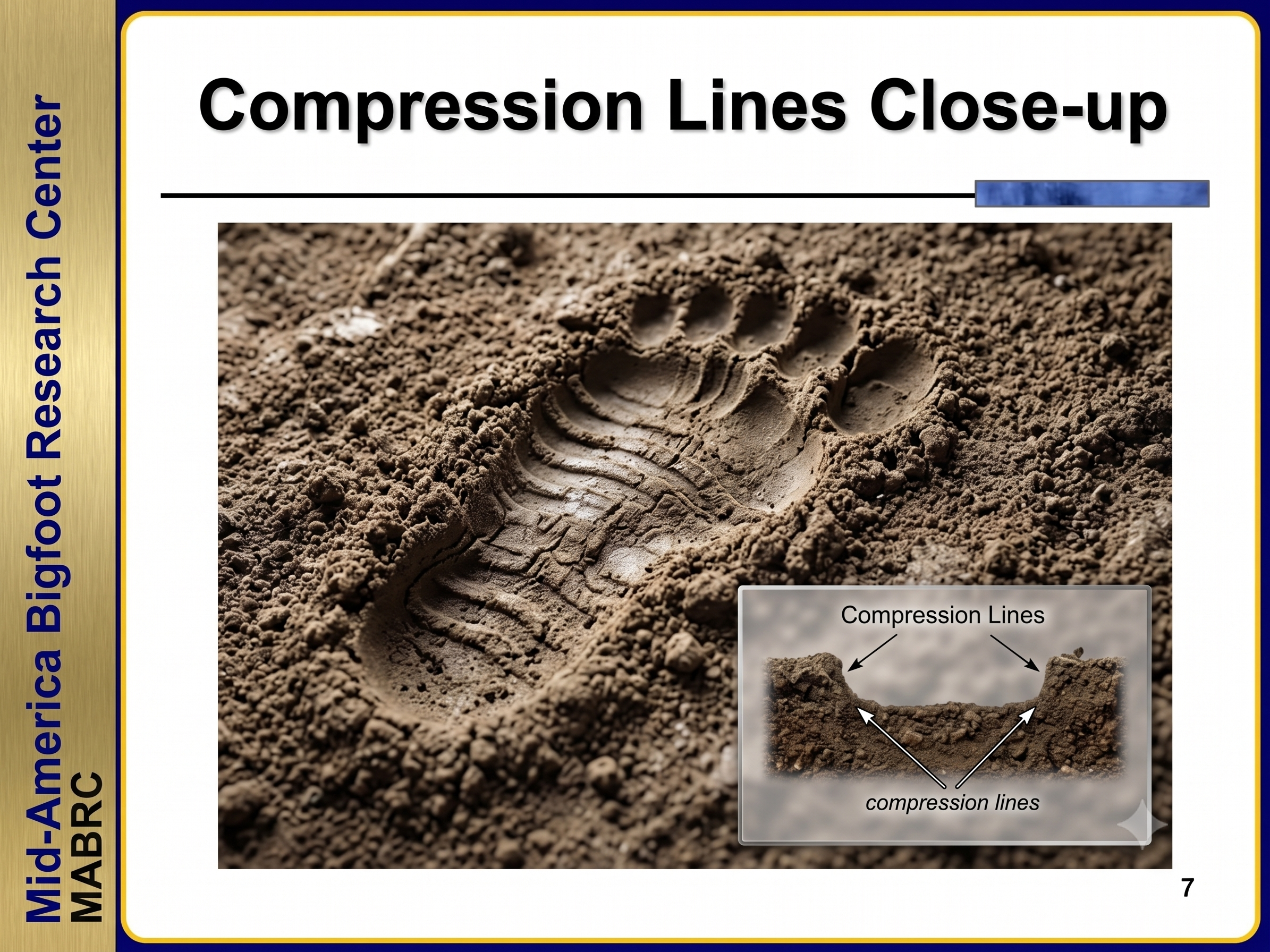
How to Spot a Faked Track:


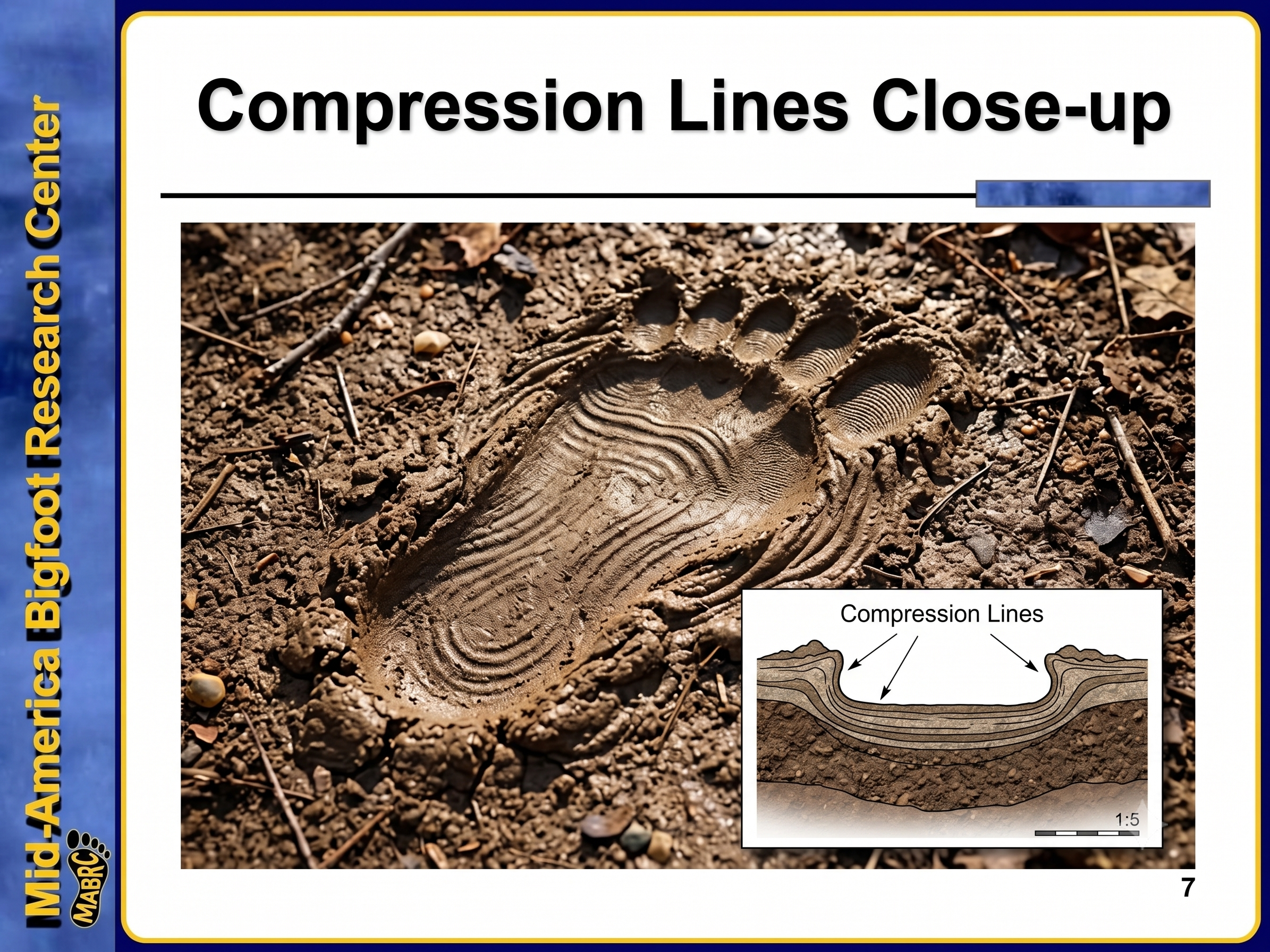
Take a close look at the small inset in the graphic. Notice how the compression lines run at an upward angle from the bottom of the print to the top? That's a dead giveaway that a rigid wooden cutout or plaster cast was pressed down into the soil.
 
An inflexible, artificial object creates distinct mechanical shear planes instead of the dynamic, rolling weight transfer of a living foot.
 
In my next post, I’ll break down what real substrate displacement looks like when an actual, fleshy foot makes a track. Stay tuned!

The Hillside Encounter in the Valley

 
This encounter went down just over the ridge from the historic Baker’s Dozen sighting. We were running a night expedition into the valley, planning to drop a listening post roughly a mile deep into the timber.
 
Our listening rock was a huge slab resting right in the creek bed, offering a dry perch above the water. ElectricBigfoot, Squatchfinder, No Mercy, Splatter, and I crossed the creek and started our trek in. We weren't even a half-mile along before heavy footsteps began paralleling us on the opposite bank—matching our cadence step for step, pausing when we paused. It was moving significant weight, snapping deadfall that echoed straight across the ravine.
 
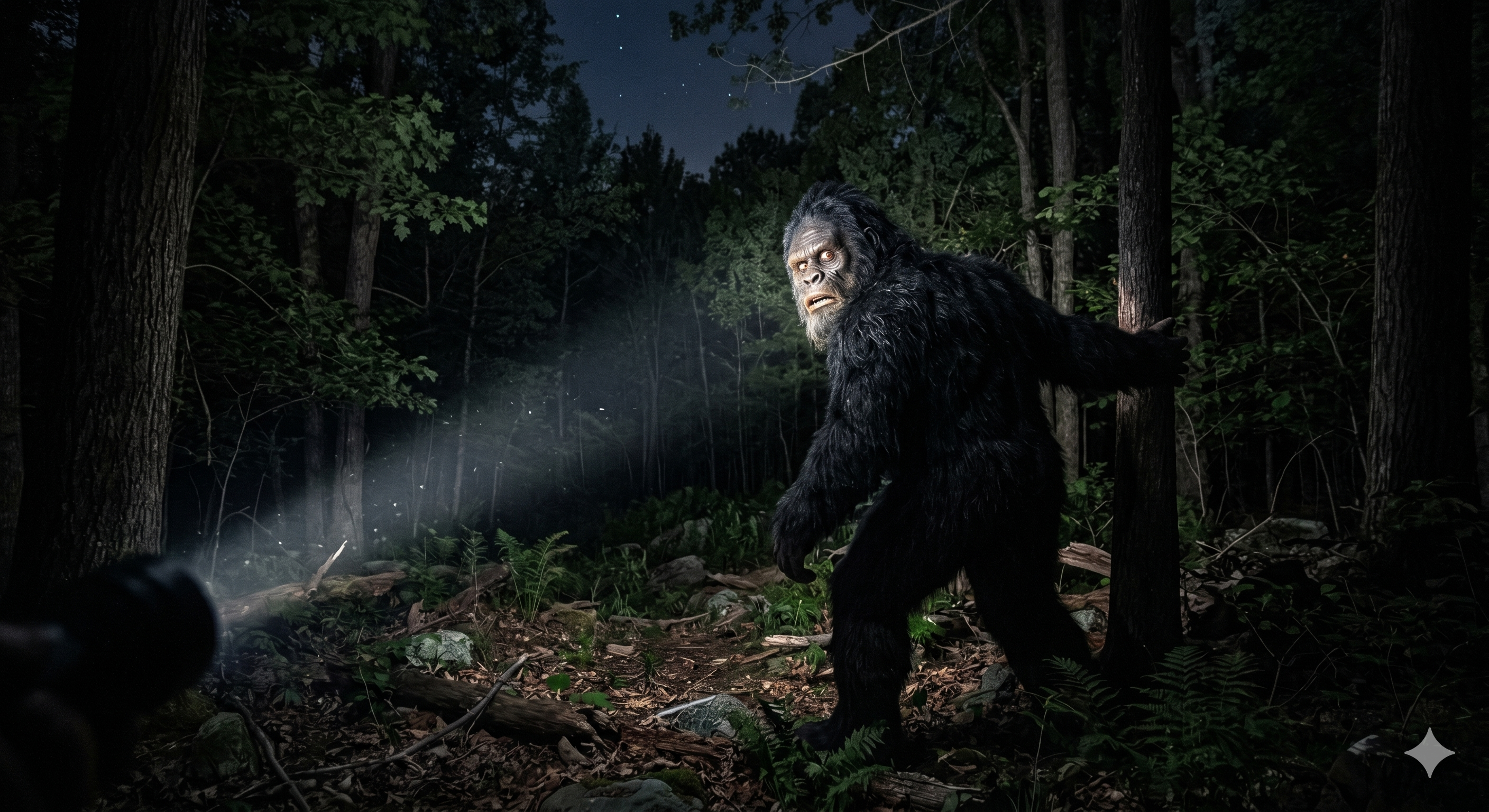
We reached the boulder and went dark. Whatever had been shadowing us had pushed past our position, so we sat silent, listening into the black. Half an hour later, water churned hard in the creek just south of us. ElectricBigfoot and I hit our lights. The splashing cut off immediately. I panned my beam along the far bank as did ElectricBigfoot, and right as the light swept level with our rock, two reflective eyes lit up in the brush.
 
The creature spun and bounded up the ridge.
 
Instinct took over. I waded the creek in pursuit while the guys stayed anchored to the rock. Partway up the incline, common sense kicked in—I was charging uphill into pitch darkness with empty hands. I spun around and yelled down for No Mercy to run me the bear spray. He hustled over, shoved the canister in my hand, and turned right back around.
 
“You coming up with me?” I asked.
 
“Hell no.”
 
I continued up the ridge alone, keeping the flashlight beam working in a tight front arc. I wanted eyes on him, not an ambush.
 
I crested onto a level bench and swept the clearing. On my first pass, something felt off near the far tree line—a thick, mounded shadow against the trunks. I swung the light away and brought it right back. The moment the beam caught it, the shadow unfolded and stood upright. The creature had been hunkered down tight, masquerading as a low deadfall bush.
 
It turned square to me, throwing a cold look that read loud and clear: Don't push your luck.
 
That was the instant reality set in. Forcing a confrontation up here was suicide. I immediately dipped the beam down to its feet so as not to challenge it with direct eye contact. It paused, turned, and disappeared over the crest into the black timber.
 
I didn't turn my back. I backed down that hillside one careful step at a time until my boots hit the creek gravel.
 
(AI Image for visual representation)
 

How to Spot a Real Track: Living Foot Dynamics

 
Following up on my last post about mechanical fakes—here’s what to look for when a track is made by an actual, fleshy foot.
 
Take a close look at the inset graphic. Notice how the compression lines bow outward along the heel pad before contouring back inward toward the arch?
 
That lateral spread shows dynamic tissue expansion. When a living creature puts its full weight down, the flesh and fatty pads compress and spread sideways into the soil. A rigid wooden fake or plaster stomp can’t do that—it just punches straight down.
 
Real flesh leaves living displacement lines every single time.

The "Spider-Crawl" Fad vs. What the Old-Timers Called "4x4 Mode"

 
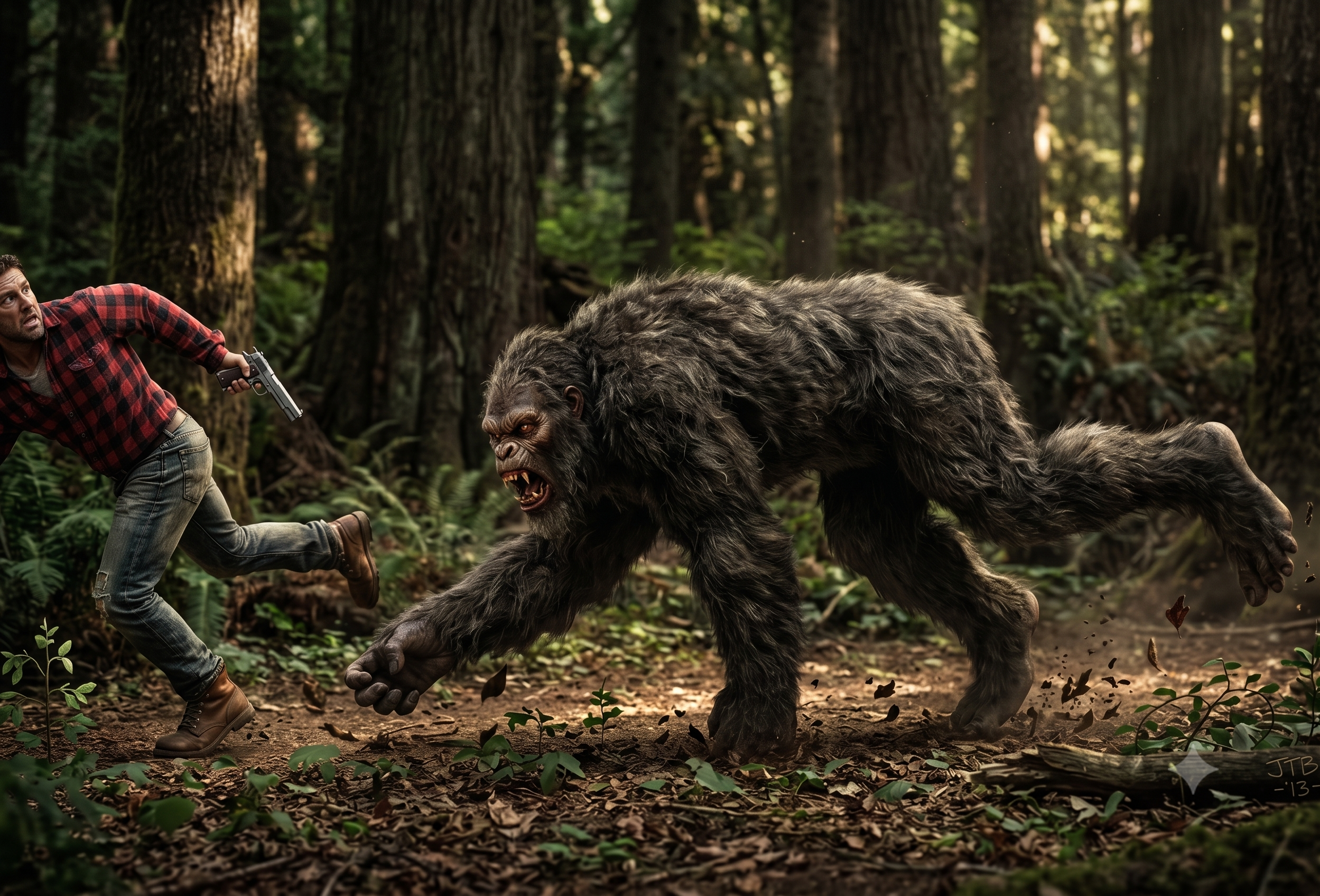
Over the last few years, social media has been flooded with claims about Bigfoot doing a "spider-crawl." While the internet treats this like a brand-new mystery, southern researchers have documented it for decades. We've always called it dropping into 4x4 mode.
 
When a Sasquatch drops to all fours, it isn't some supernatural creep—it's functional biomechanics. They engage the mid-tarsal break, allowing the foot to flex in the middle rather than acting like a rigid human lever. That articulation gives them phenomenal rear-drive traction and an explosive burst of speed when running down prey.
 
Beyond raw acceleration, dropping low instantly collapses their massive vertical silhouette, letting them slip across open fields or under low timber without drawing an eye.
 
Other researchers and I have tracked and observed this behavior for years. The internet didn't discover a new monster; they just stumbled onto basic Sasquatch locomotion.
 
(AI image is for demonstrative purposes)